Tracing Footwork Fundamentals from Swedish Handball to Tennis and Athletics Events
Skriven av Zoe Vogel · 2026-09-09
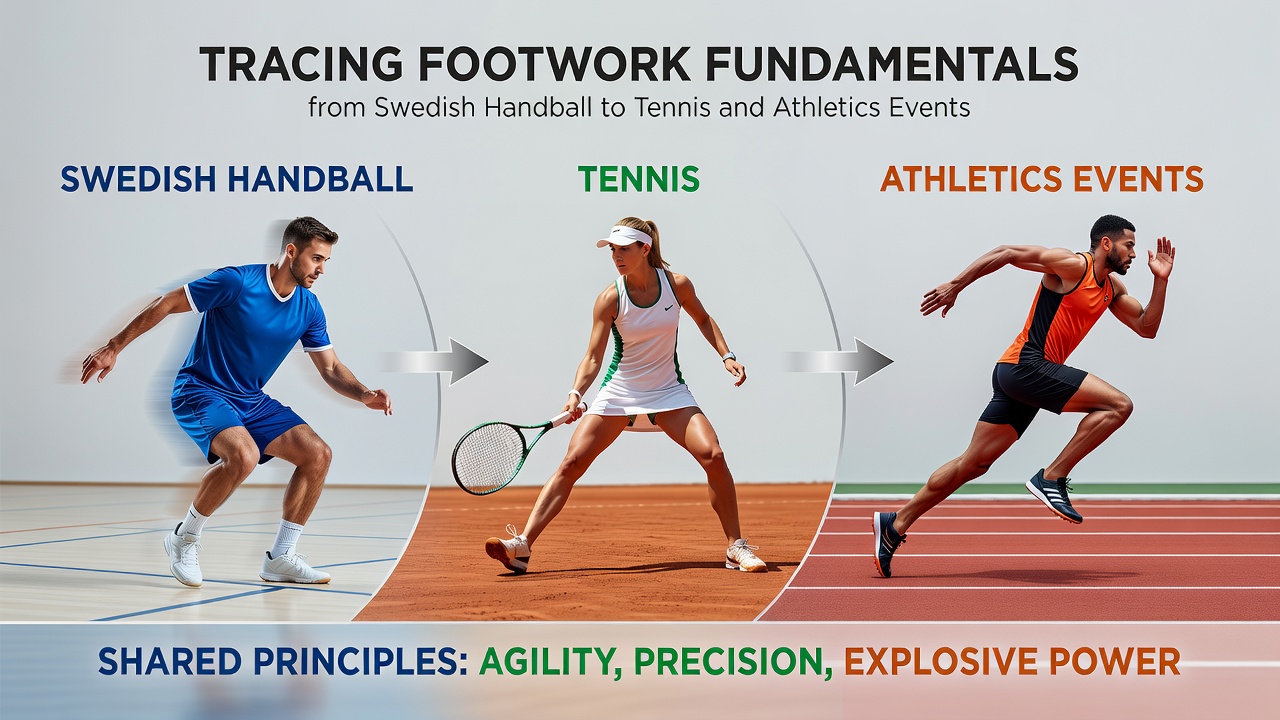
Tracing Footwork Fundamentals from Swedish Handball to Tennis and Athletics Events
Swedish handball has long emphasized precise footwork patterns that prioritize quick directional changes and balance under pressure, and these elements have carried over into tennis and athletics training programs across multiple countries. Data from the European Handball Federation shows that national teams in Sweden incorporate drills focused on short explosive steps combined with pivots, and athletes from other sports have adapted similar techniques to improve court coverage and track efficiency.
Core Elements of Handball Footwork
Handball players execute lateral shuffles, crossover steps, and rapid stops that maintain a low center of gravity while allowing immediate acceleration in any direction. Researchers at the University of Gothenburg documented these movements in competitive matches and found that players average over 200 directional changes per game, each requiring specific foot placement to avoid injury and maintain speed. The techniques rely on proprioception and ankle stability, skills developed through repetitive ladder drills and mirror exercises that replicate game scenarios.
Coaches integrate these fundamentals early in youth development because the sport demands constant repositioning around the goal area and defensive zones. Studies indicate that Swedish training academies allocate up to 40 percent of practice time to footwork sequences before introducing ball-handling elements, which builds a foundation that transfers across disciplines.
Adaptation in Tennis Court Movement
Tennis players have incorporated handball-derived footwork to enhance split-step timing and recovery after wide shots. The split step, a small hop that prepares the body for movement, mirrors the ready position used by handball goalkeepers and wing players. Data from professional matches reveals that players who train with handball-style lateral drills show improved reaction times on clay and grass surfaces, where sliding and planting become critical.
One training program in Stockholm pairs tennis athletes with handball specialists for joint sessions that focus on multi-directional bursts followed by immediate deceleration. These exercises help tennis competitors cover the baseline more efficiently while preserving energy for longer rallies. The crossover benefits appear most clearly in doubles play, where partners must mirror each other's positioning much like defensive units in handball.
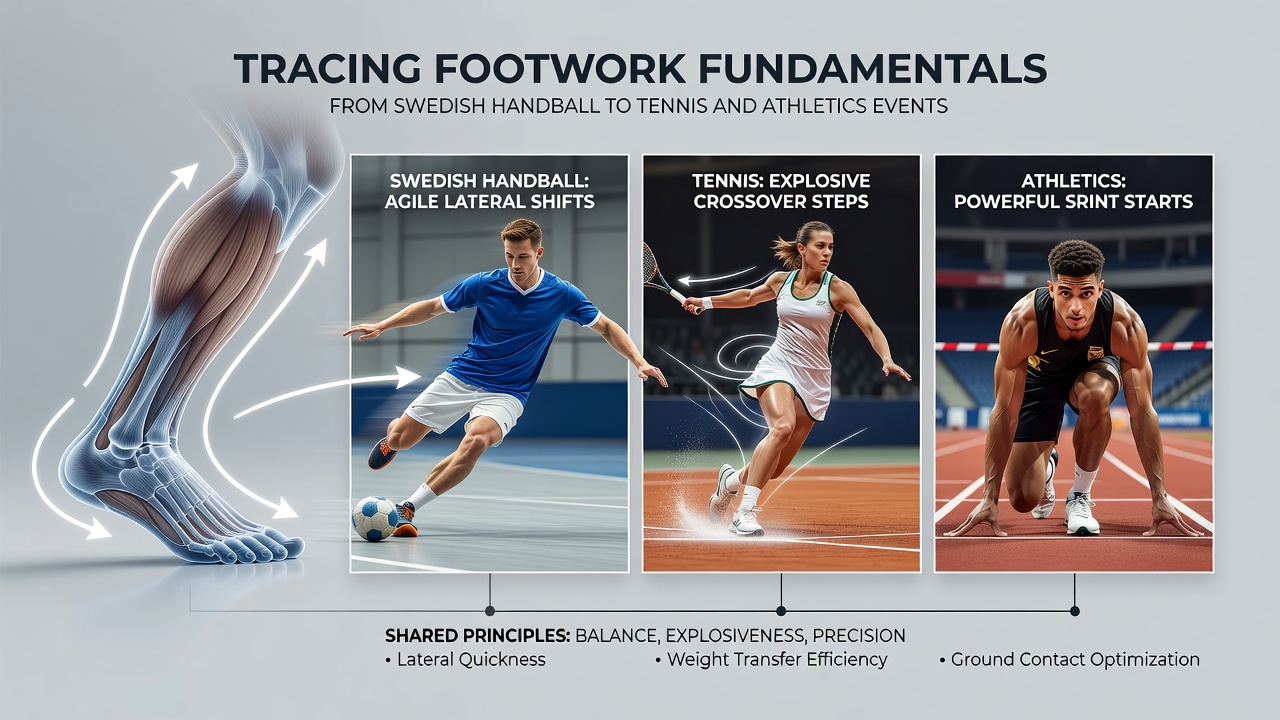
Integration with Athletics Sprint and Hurdle Techniques
Athletes in track and field events apply handball footwork principles to starting blocks and curve running. Sprint coaches note that the explosive first step in handball defense translates directly to the drive phase out of blocks, while the controlled planting used in handball helps hurdlers maintain rhythm over obstacles. World Athletics reports that several European programs now include handball-inspired agility circuits in their periodized plans, particularly during the indoor season when track access remains limited.
September 2026 brings the European Athletics Indoor Championships to a Swedish venue, and organizers have scheduled cross-training workshops that pair handball instructors with track athletes. These sessions emphasize ankle mobility and hip rotation patterns shared between the sports, allowing competitors to refine technique ahead of qualification rounds. Figures from past events show that athletes who cross-train in this manner often record faster reaction times in the 60-meter dash and 60-meter hurdles.
Shared Training Methodologies Across Sports
Programs that blend these disciplines use video analysis to compare foot strike patterns and weight distribution. Swedish sports institutes have developed software that overlays handball match footage with tennis and sprinting sequences, highlighting similarities in knee flexion angles during deceleration. This approach allows coaches to identify transferable elements without requiring athletes to switch primary sports.
Youth academies in multiple regions now schedule combined camps where handball players practice tennis serves and sprinters run handball-specific defensive patterns. The result appears in improved overall coordination, with studies from Canadian sports science centers confirming reduced injury rates among participants who rotate through these varied movement challenges.
Conclusion
Footwork fundamentals originating in Swedish handball continue to influence training protocols in tennis and athletics through deliberate cross-disciplinary exchange. Events scheduled for September 2026 will further highlight these connections by bringing practitioners together for shared instruction. Observers note that the emphasis on precise, repeatable steps provides measurable advantages in speed, balance, and injury prevention across all three sports.