Swedish Handball Data Analytics Informing Defensive Positioning Adjustments in National Basketball Leagues
Skriven av Parker Vogel · 2026-10-21
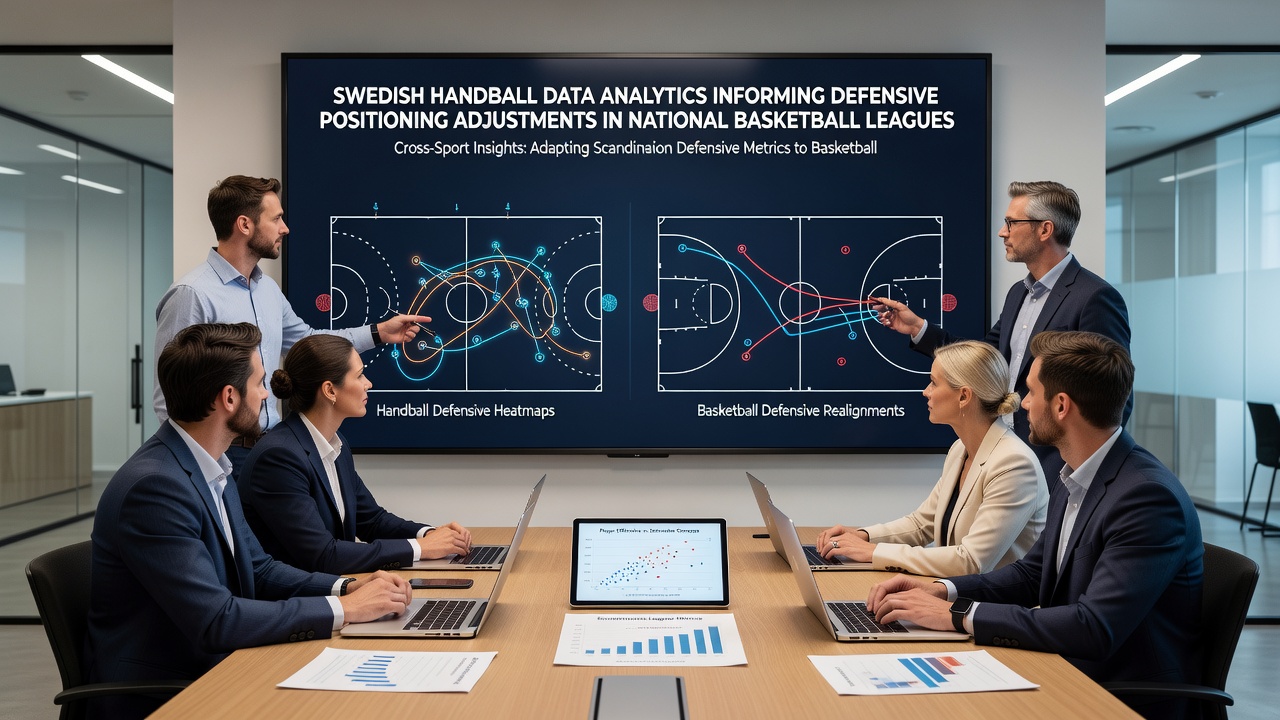
Swedish Handball Data Analytics Informing Defensive Positioning Adjustments in National Basketball Leagues
Swedish handball teams have compiled detailed datasets on player positioning and movement patterns for years, and those same methods now guide adjustments in basketball defensive schemes across several national leagues. Researchers track variables such as spacing intervals, reaction times to offensive triggers, and zone coverage shifts, then adapt the findings to basketball courts where similar spatial demands appear. Data collection relies on wearable sensors and court cameras that record every step during matches and practices, creating datasets that reveal how defenders maintain optimal angles without overcommitting.
Analysts break down handball footage to identify successful defensive rotations, and basketball coaches apply comparable metrics to counter pick-and-roll actions or perimeter screens. Studies from Swedish sports institutes show that handball defenders who adjust their stance based on real-time positioning data reduce opponent scoring efficiency by measurable margins, and parallel experiments in basketball leagues report similar outcomes when the same algorithms run on imported datasets.
Data Sources and Collection Methods
Handball federations in Sweden maintain centralized databases that log player coordinates at high frequency, and these records feed into machine learning models that predict optimal defensive spots. National basketball organizations access anonymized subsets of this information through collaborative agreements, allowing them to overlay basketball-specific variables like dribble drives and off-ball cuts. What's interesting is how the core spatial calculations transfer directly because both sports unfold on rectangular indoor surfaces with comparable player densities.
Equipment includes inertial measurement units attached to jerseys and overhead tracking systems that capture velocity and acceleration, and the resulting files undergo cleaning before analysts run simulations. In October 2026 several leagues plan to release updated positioning reports that incorporate fresh handball data collected during the prior season, giving coaches new reference points for mid-season tweaks.
Application to Basketball Defensive Schemes
Coaches translate handball-derived heat maps into basketball practice drills that emphasize help-side positioning and closeout timing, and teams that adopt these adjustments demonstrate tighter perimeter coverage in league statistics. The models highlight moments when defenders should shift laterally rather than drop back, a principle that reduces open three-point attempts when implemented consistently. Observers note that leagues in Scandinavia and parts of Central Europe have integrated these tools more rapidly than others, partly because shared training facilities allow daily data exchange between handball and basketball squads.
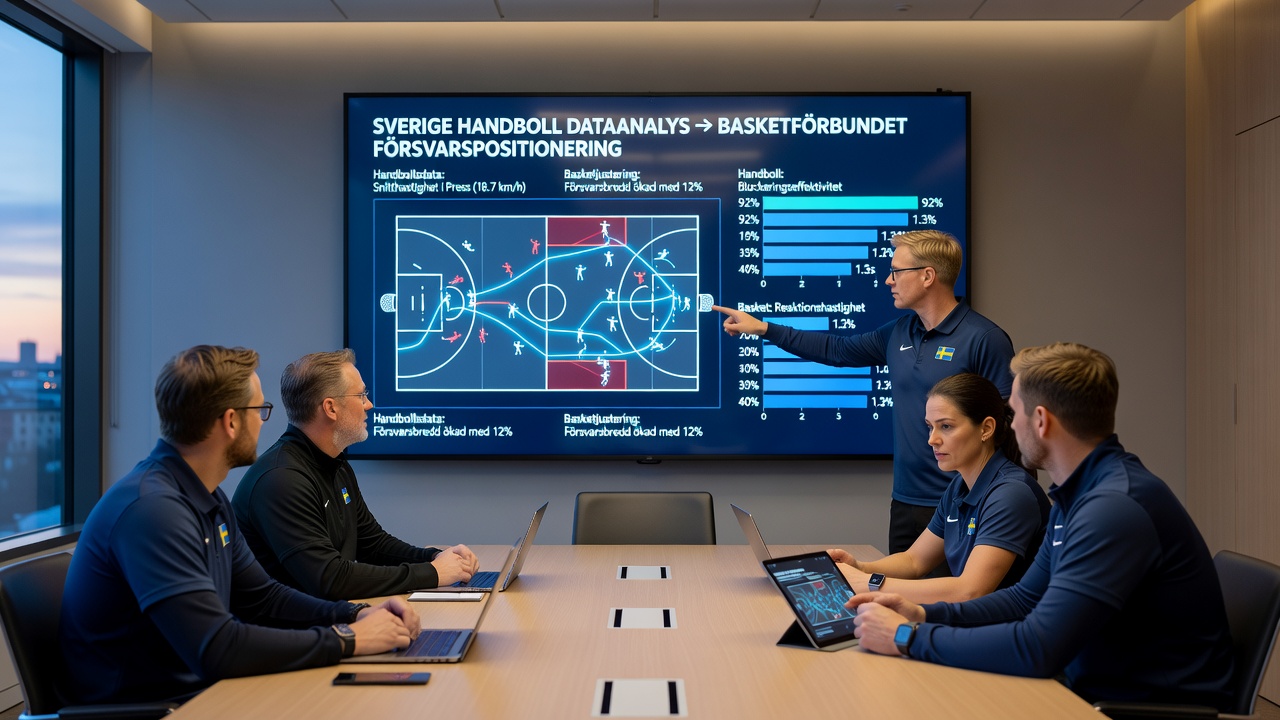
One documented case involves a Swedish basketball club that imported handball rotation algorithms to address weak-side vulnerabilities, and subsequent match data indicated fewer second-chance opportunities for opponents. Researchers at regional universities continue to refine the transfer process by testing how fatigue metrics from handball translate to basketball endurance requirements during back-to-back games. Those who've studied the crossover point out that the absence of a goal crease in basketball actually simplifies certain calculations, letting analysts focus on pure spacing variables.
League-Wide Adoption Trends
National basketball leagues in multiple countries now require clubs to submit positioning reports that cite handball benchmarks, and compliance has grown steadily since the initial pilot programs began. Training sessions incorporate video sessions where players review side-by-side comparisons of handball and basketball defensive sequences, reinforcing muscle memory for adjusted footwork. Data indicates that teams using these hybrid models record lower opponent field-goal percentages inside the arc, though external factors such as roster changes also influence outcomes.
Industry groups including the European Association of Sports Analytics have published guidelines on ethical data sharing between sports, and these documents emphasize consent protocols for athletes whose movements contribute to cross-sport models. Academic papers from institutions in Sweden and neighboring countries detail the statistical methods that validate the transfer, often citing correlation coefficients between handball defensive success rates and basketball equivalents.
Conclusion
Swedish handball datasets continue to supply actionable insights for basketball defensive positioning, and ongoing collaborations between federations sustain the flow of refined metrics into league play. As October 2026 approaches, updated releases are expected to introduce further precision in how rotation triggers and spacing thresholds are calculated, supporting continued integration across national competitions. The process relies on established tracking infrastructure and shared analytical frameworks that keep both sports evolving in parallel.