Midnight Sun Protocols: How Extended Daylight Reshapes Training Cycles for Swedish Golfers, Tennis Players and Skiers
Skriven av Zoe Vogel · 2026-08-20

Midnight Sun Protocols: How Extended Daylight Reshapes Training Cycles for Swedish Golfers, Tennis Players and Skiers
Northern Sweden experiences extended daylight periods from May through July, with the sun remaining above the horizon for up to 24 hours in areas above the Arctic Circle, and this phenomenon directly influences how athletes structure their daily routines and seasonal preparation plans. Golfers, tennis players, and skiers adjust their training cycles to capitalize on these long hours while managing recovery demands that differ from those in southern latitudes.
Extended Daylight Effects on Golf Training Schedules
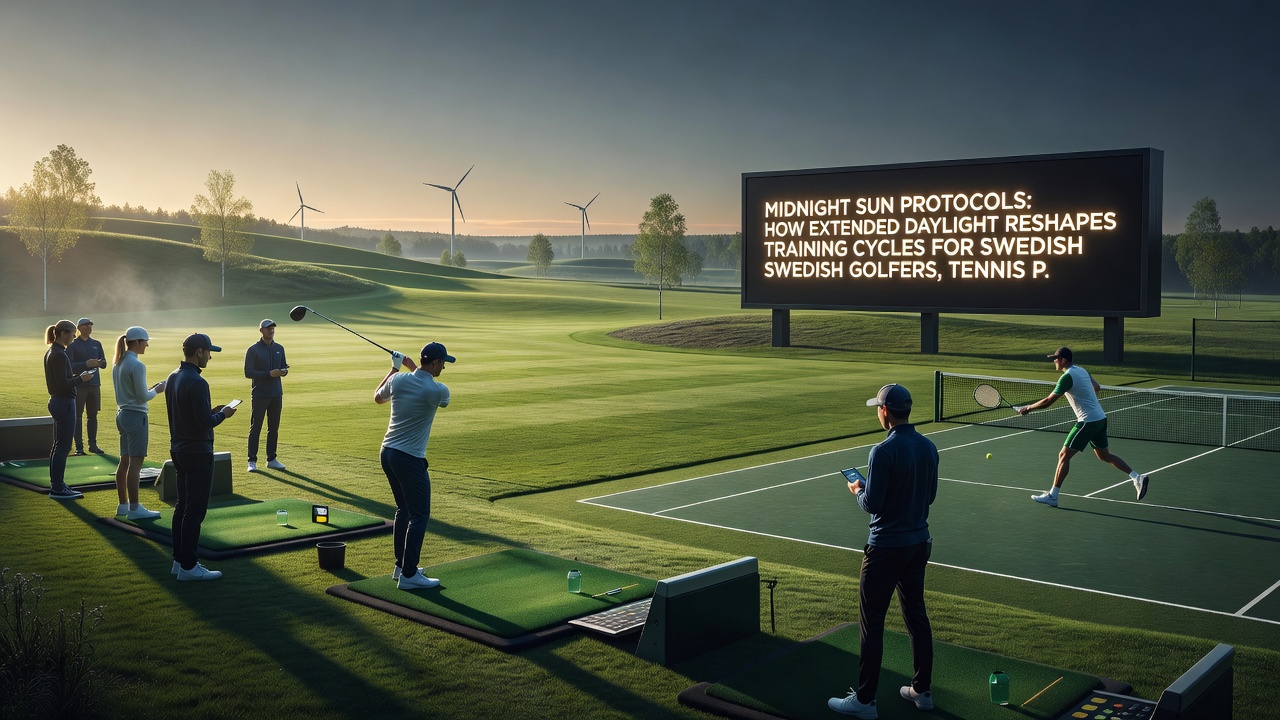
Golf facilities in northern Sweden extend operating hours during the summer months, allowing players to complete multiple rounds and practice sessions within a single day without artificial lighting. Data collected by regional golf associations show that average daily practice time increases by 40 percent compared to winter months, as athletes take advantage of consistent natural light from early morning through late evening. Training protocols incorporate split sessions that separate technical work from strength conditioning, with midday rest periods scheduled to align with peak temperatures and light intensity.
Coaches monitor sleep patterns closely because the continuous daylight disrupts normal melatonin production, and many programs now include blackout curtains and scheduled dim-light periods in the evenings to restore circadian balance. One study tracking elite amateur golfers found that those who maintained consistent evening wind-down routines preserved swing consistency better across multi-day tournaments held in August. August 2026 marks the implementation of updated federation guidelines that require clubs to log daylight-adjusted training volumes for national team selection reviews.
Tennis Programs Adapt to Prolonged Light Exposure
Tennis centers in Sweden report similar extensions in court availability, with many facilities remaining open until 11 p.m. during peak summer weeks. Players often divide training into morning technical drills, afternoon match play, and evening conditioning, creating three distinct blocks that replace the traditional two-session model used in winter. Heart-rate monitoring data from national development squads indicate that total weekly court time rises substantially, yet injury rates remain stable when recovery windows are protected through mandatory rest protocols.
Nutrition timing shifts as well, with carbohydrate intake scheduled around longer daylight activity peaks rather than standard meal times. Researchers at the University of Gothenburg have documented how these adjustments affect serve velocity and endurance metrics across age-group competitors. University of Gothenburg research highlights measurable improvements in rally duration when players follow light-synchronized meal plans.
Summer Training Adjustments for Ski Athletes
Cross-country and alpine skiers use the same extended daylight for intensive dry-land training blocks that include roller-skiing, strength circuits, and technique drills on forest trails. Because snow cover disappears by late spring in most training areas, athletes rely on these long days to accumulate high training volumes before winter competition blocks begin. Programs in regions such as Jämtland and Norrbotten schedule early morning and late evening sessions to avoid midday heat, creating a bimodal daily pattern that mirrors winter competition demands.
Recovery protocols emphasize active cool-downs under natural light followed by controlled indoor environments to simulate shorter winter days. National team support staff track hormone levels and resting heart rates throughout the summer to detect overtraining signals that can emerge when daylight masks normal fatigue cues. August 2026 preparations include pilot testing of wearable devices that automatically adjust light exposure recommendations based on individual sleep data collected during the previous midnight sun period.
Cross-Sport Coordination and Shared Resources
Multi-sport training centers in northern Sweden now coordinate schedules so that golfers, tennis players, and skiers share access to gym facilities and recovery rooms during overlapping daylight hours. Shared calendars prevent conflicts while allowing each sport to maintain sport-specific volume targets. Strength and conditioning coaches apply common principles for light management, including timed exposure to blue-light filters after 9 p.m. and group education sessions on sleep hygiene that all three athlete groups attend.
Performance analysts compile comparative datasets showing how each sport responds differently to the same environmental conditions, with golf demonstrating the largest gains in technical repetition volume and skiing showing the most pronounced shifts in aerobic capacity markers. These combined records inform annual planning meetings held each September, when coaches review summer outcomes and set winter objectives.
Conclusion
Swedish athletes across golf, tennis, and skiing continue to refine midnight sun protocols through systematic data collection and coordinated scheduling that accounts for both performance gains and recovery requirements. The approach integrates extended training windows with deliberate light-management strategies, producing measurable adaptations that carry into winter competition phases. August 2026 will serve as a benchmark year for evaluating the latest updates to these seasonal frameworks.