Adapting Ski Wax Formulations to Enhance Grip in Tennis and Golf for Swedish Multi-Sport Athletes
Skriven av Felix Bennett · 2026-11-04
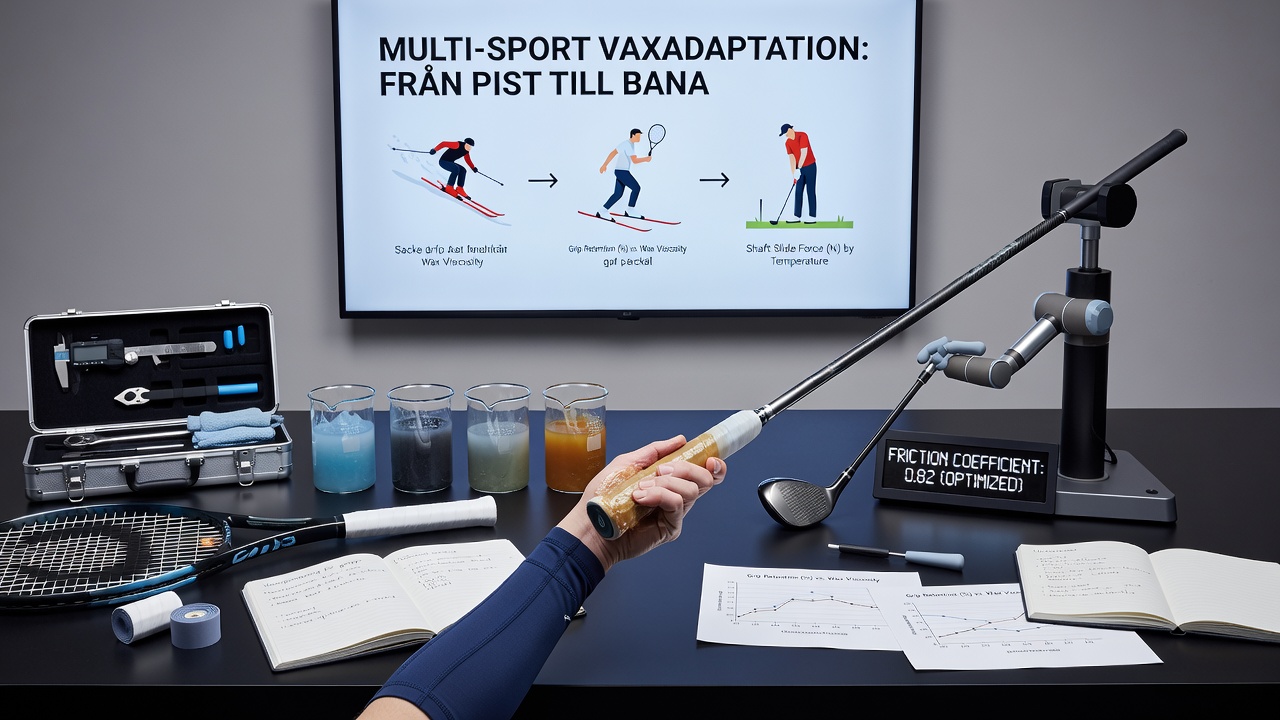
Adapting Ski Wax Formulations to Enhance Grip in Tennis and Golf for Swedish Multi-Sport Athletes
Swedish competitors who move between alpine skiing, tennis courts, and golf courses have drawn attention from materials scientists seeking to repurpose ski wax chemistry for better equipment friction, and this crossover work focuses on adjusting hydrocarbon blends and additive ratios to shift performance from glide to controlled grip. Researchers at institutions such as Lund University have examined how base paraffin structures combined with synthetic polymers can increase surface tackiness without compromising durability under repeated contact, while data from national training centers shows athletes applying these modified coatings to racket handles and club shafts during seasonal transitions.
Wax Chemistry Basics and Friction Control
Ski waxes traditionally rely on straight-chain alkanes for low-friction glide in cross-country events, yet formulations that incorporate higher molecular weight resins and micro-crystalline additives raise the coefficient of friction to levels suitable for gripping applications, and laboratory tests indicate that increasing the proportion of branched hydrocarbons can raise static friction by 15 to 25 percent compared with standard glide waxes. Observers note that temperature-specific tuning remains critical because colder conditions stiffen the wax matrix while warmer November conditions soften it, so Swedish teams begin reformulating batches each autumn ahead of the 2026 training cycle that starts in November 2026.
Application to Tennis Racket Handles
Tennis players require consistent grip friction during high-speed swings and directional changes, and adapted wax mixtures applied in thin layers to leather or synthetic grips have demonstrated reduced slippage in humidity-controlled trials conducted by Swedish national federations. Athletes often layer the wax over existing overgrips before matches, allowing the resin components to bond with moisture on the skin and create a temporary increase in tack, while studies from the Swedish School of Sport and Health Sciences reveal that reapplication intervals of every three sets maintain performance without buildup that could affect racket balance. Equipment technicians report that these coatings withstand the abrasion of repeated impacts better than commercial grip sprays in many cases because the wax matrix flexes rather than flakes.
Adaptations for Golf Club Shafts
Golf swings depend on precise shaft control during the transition from backswing to downswing, and friction modifications derived from kick-wax technology help maintain hand position without excessive glove reliance. Formulators adjust the wax by blending fluorinated compounds at lower percentages than those used for ski bases, which raises dynamic friction along the grip zone while preserving shaft flex characteristics, and field measurements taken on Swedish practice ranges show torque reduction of up to 12 percent during driver swings when the adapted wax is present. Maintenance routines involve cleaning the shaft with isopropyl alcohol between rounds to remove residue, and this approach integrates smoothly into existing club-care protocols used by multi-sport athletes.

Environmental and Regulatory Considerations
Fluorinated wax components face increasing restrictions across Europe, prompting researchers to explore plant-based ester alternatives that deliver comparable friction profiles, and the European Chemicals Agency guidelines encourage substitution where performance remains equivalent. Swedish manufacturers have begun pilot production of non-fluorinated grip waxes ahead of updated EU rules scheduled for implementation after 2026, while data collected through the Swedish Environmental Protection Agency indicates that these substitutes maintain grip enhancement within 5 percent of fluorinated versions across a range of temperatures. Athletes and support staff therefore monitor regulatory updates closely to ensure continued compliance during international competitions.
Training Integration and Seasonal Timing
Multi-sport schedules in Sweden often place golf and tennis practice in shoulder seasons around ski training blocks, and coaches incorporate wax adaptation sessions during November 2026 preparation periods when indoor facilities allow controlled testing of grip modifications. One documented case involved a national-level competitor who alternated between ski kick-wax testing in the morning and tennis-specific handle applications in the afternoon, with performance logs showing improved shot consistency after the switch to customized formulations. Equipment suppliers now offer pre-mixed kits tailored to regional humidity levels, and these products draw on research from both domestic and international sources including reports issued by the International Ski Federation and the Canadian Sport Institute.
Conclusion
Material adaptations that repurpose ski wax chemistry continue to support grip optimization across tennis and golf equipment for Swedish multi-sport athletes, with ongoing refinements driven by performance data, environmental regulations, and seasonal training demands. As November 2026 approaches, teams will apply lessons from current testing cycles to refine application methods and additive ratios further, ensuring equipment remains consistent across disciplines while meeting emerging sustainability standards.